Gut Health and Testosterone: 7 Powerful Ways to Improve Both
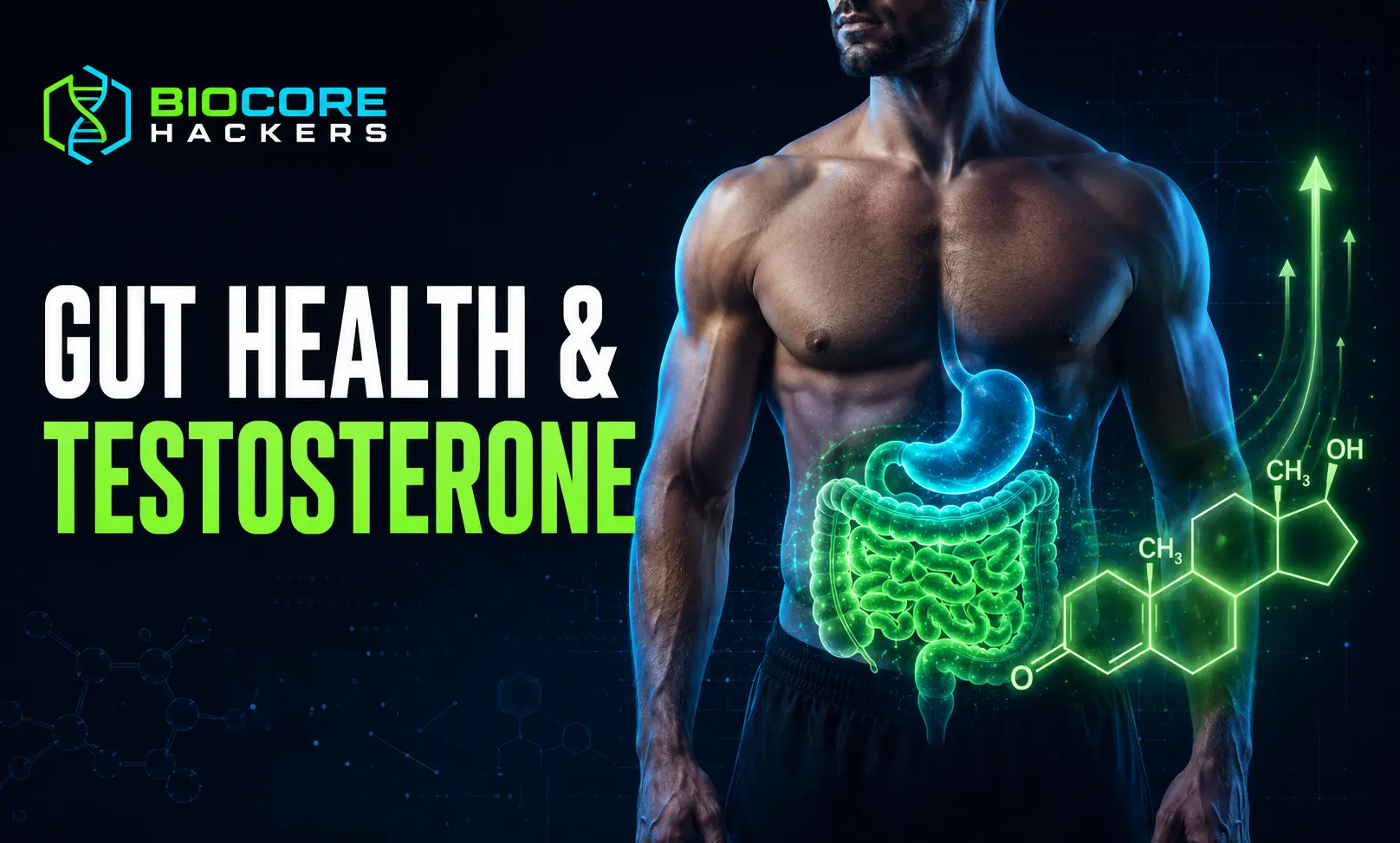
Gut health and testosterone may be more closely connected than most men realize. Your digestive system does much more than process food. It contains trillions of microorganisms that interact with your immune system, metabolism, inflammation levels, nutrient absorption, and hormonal environment.
Researchers are now studying a possible “gut–testis axis,” which describes the two-way relationship between intestinal microorganisms and male reproductive health. However, this does not mean that eating yogurt or taking a probiotic will instantly increase testosterone.
The science is still developing, particularly in humans. What we know more confidently is that obesity, poor nutrition, metabolic dysfunction, chronic inflammation, insufficient sleep, and physical inactivity can negatively affect digestive health and testosterone production.
Understanding gut health and testosterone can help men adopt a more complete approach to hormonal wellness. Instead of depending on a single supplement, the objective should be to improve nutrition, digestion, sleep, training, body composition, and metabolic health together.
Improving your digestive health is not a miracle testosterone hack. It is one part of creating a healthier internal environment for hormone production, physical performance, recovery, and long-term well-being.
Table of Contents
What Is Gut Health?
Gut health generally describes how effectively your gastrointestinal system digests food, absorbs nutrients, maintains its intestinal barrier, and interacts with its community of microorganisms.
These microorganisms—including bacteria, fungi, and viruses—are collectively known as the gut microbiota. The genetic material and activities of this microbial community are commonly called the gut microbiome.
A healthy gut does not require a “perfect” collection of bacteria. Every person has a different microbiome. Researchers generally associate a healthier intestinal environment with microbial diversity, normal digestive function, a resilient intestinal barrier, and balanced immune activity.
Microorganisms in the colon can ferment certain dietary fibers and produce short-chain fatty acids, including butyrate, acetate, and propionate. These compounds participate in immune regulation, metabolism, and intestinal-barrier maintenance.
These important functions help explain why the relationship between gut health and testosterone has attracted growing scientific attention.
How Are Gut Health and Testosterone Connected?
Testosterone is primarily produced by Leydig cells in the testes. Its production is regulated through the hypothalamic-pituitary-gonadal axis, a communication system involving the brain, pituitary gland, and testes.
Your gut does not directly control testosterone production. However, the digestive system and its microorganisms may influence several factors involved in hormonal health.
The relationship between gut health and testosterone also appears to be bidirectional. Testosterone may affect the composition of intestinal microorganisms, while the gut microbiome may influence inflammation, metabolism, and hormone processing.
Researchers are still determining how significant these interactions are in humans.
The gut microbiome and sex hormones influence each other
Studies suggest that male and female sex hormones may affect microbial composition. At the same time, intestinal microorganisms may participate in the metabolism and circulation of certain hormones.
Research involving healthy men has found associations between testosterone levels, certain bacterial groups, and greater microbial diversity. However, an association does not prove that these bacteria directly increased testosterone.
A recent systematic review also reported a positive relationship between testosterone levels and certain microbiome characteristics in men. Nevertheless, more controlled human studies are needed before specific bacteria or probiotic products can be recommended for increasing testosterone.
The current evidence suggests a connection, but scientists have not yet identified a universal “testosterone microbiome.”
Chronic inflammation may interfere with hormonal health
The intestinal barrier helps control what passes from the digestive system into circulation. Poor diet, excessive alcohol, obesity, illness, certain medications, and other factors can affect this barrier and the gut microbiome.
When the metabolic and intestinal environment becomes unhealthy, inflammatory signals may increase. Chronic inflammation can interfere with several processes involved in normal endocrine and testicular function.
Inflammation is therefore one possible link between gut health and testosterone. However, much of the direct research concerning intestinal permeability, bacterial endotoxins, and testicular testosterone production comes from animal or mechanistic studies.
These findings are promising, but they do not prove that every digestive problem causes low testosterone in humans.
Your gut helps absorb important nutrients
Healthy testosterone production requires adequate energy, protein, healthy fats, vitamins, and minerals. Your digestive system is responsible for breaking down food and absorbing these essential nutrients.
Zinc, vitamin D, magnesium, and other nutrients participate in general health and normal physiological processes. However, taking very high doses does not guarantee higher testosterone. Supplements are most beneficial when they correct a genuine deficiency.
Nutrition connects gut health and testosterone because the body cannot effectively use nutrients that are poorly digested or absorbed.
Learn more about zinc for better health and the benefits of vitamin D.
The gut is connected with metabolic health
Obesity, insulin resistance, and metabolic disease are frequently associated with lower testosterone in men. These conditions are also associated with changes in microbial composition and higher systemic inflammation.
This does not mean that gut bacteria are solely responsible for low testosterone. Body-fat percentage, calorie intake, age, sleep, medications, illness, genetics, and physical activity all matter.
Improving metabolic health through sustainable nutrition, resistance training, adequate sleep, and weight management may benefit both gut health and testosterone.
Can Poor Gut Health and Testosterone Problems Be Connected?
Poor gut health alone cannot be assumed to cause low testosterone. The available evidence is not strong enough to diagnose a hormonal problem based on bloating, constipation, diarrhea, or commercial microbiome tests.
Nevertheless, digestive and hormonal problems can share several risk factors:
- A highly processed and low-fiber diet
- Excessive alcohol consumption
- Obesity and insulin resistance
- Chronic psychological stress
- Poor or insufficient sleep
- Physical inactivity
- Certain illnesses and medications
- Extreme dieting or prolonged calorie restriction
- Nutrient deficiencies
- Overtraining without sufficient recovery
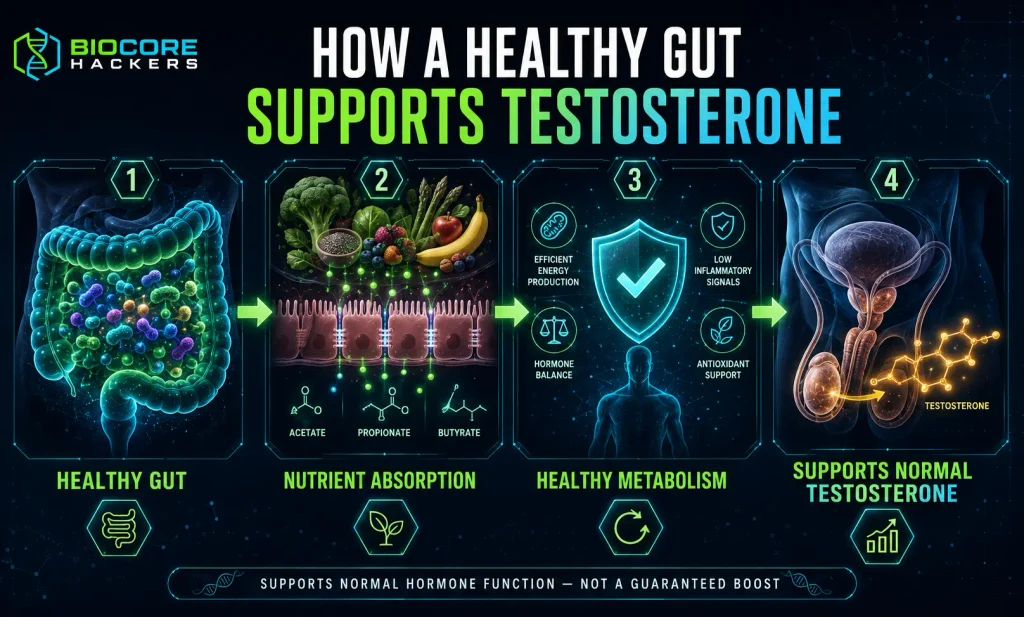
For example, a man who sleeps poorly, consumes very little fiber, drinks heavily, and carries excessive abdominal fat may experience digestive symptoms and low testosterone.
The cause would probably involve a combination of lifestyle, metabolic, and medical factors—not one “bad” intestinal bacterium.
This distinction is essential when discussing gut health and testosterone responsibly.
Signs Your Gut May Need Attention
Occasional gas or digestive discomfort is common. Persistent symptoms deserve more attention and may require professional assessment.
Possible signs of digestive dysfunction include:
- Frequent bloating
- Persistent constipation or diarrhea
- Excessive gas
- Abdominal discomfort
- Regular heartburn or reflux
- Unexplained changes in bowel movements
- Food-related symptoms that continue to worsen
- Unintentional weight loss
- Blood in the stool
Blood in the stool, severe abdominal pain, persistent vomiting, black stools, fever, dehydration, or unexplained weight loss should be evaluated promptly by a qualified healthcare professional.
Digestive symptoms do not automatically mean that you have low testosterone. Similarly, fatigue, low motivation, or poor gym performance cannot confirm a hormonal deficiency.
7 Ways to Support Gut Health and Testosterone Naturally
The most effective strategy is to support overall health instead of chasing one bacterium, food, or supplement.
1. Increase dietary fiber gradually
Fiber provides fuel for many intestinal microorganisms. Its fermentation produces short-chain fatty acids that support the intestinal environment and participate in immune and metabolic regulation.
The National Institute of Diabetes and Digestive and Kidney Diseases explains that adults generally need approximately 22 to 34 grams of fiber per day, depending on age and sex.
Good sources include:
- Lentils, chickpeas, and beans
- Oats and barley
- Apples, berries, oranges, and pears
- Broccoli, carrots, onions, and leafy vegetables
- Nuts and seeds
- Whole-grain bread, pasta, and rice
Increase your fiber intake gradually. A sudden increase can cause gas, bloating, or abdominal discomfort. Drinking sufficient water is also important when consuming more fiber.
A fiber-rich diet supports gut health and testosterone indirectly by improving digestive function, appetite control, body-weight management, and metabolic health.
2. Eat a greater variety of plant foods
Different fibers and plant compounds feed different microorganisms. Instead of depending on one “superfood,” regularly rotate fruits, vegetables, legumes, whole grains, herbs, spices, nuts, and seeds.
A practical strategy is to include several plant colors throughout the week. Blueberries, carrots, tomatoes, spinach, onions, beans, oats, and walnuts provide different combinations of fiber and plant compounds.
Variety is generally more valuable than repeatedly eating large quantities of one vegetable.
This approach may support gut health and testosterone by improving overall dietary quality and providing nutrients needed for normal physiological function.
3. Include fermented foods if you tolerate them
Fermented foods may introduce live microorganisms or useful fermentation products into your diet.
Suitable options include:
- Yogurt containing live cultures
- Kefir
- Sauerkraut
- Kimchi
- Traditionally fermented vegetables
Not every fermented product contains clinically meaningful quantities of live microorganisms. Some products are pasteurized after fermentation, while others contain considerable salt or added sugar.
Begin with small portions and assess your tolerance. Fermented foods may worsen symptoms in some people with irritable bowel syndrome or other digestive conditions.
4. Maintain a healthy body-fat level
Excess body fat, particularly visceral fat around the abdomen, is associated with insulin resistance, inflammation, sleep apnea, and lower testosterone in many men.
Losing excessive weight through a sustainable calorie deficit may improve the hormonal and metabolic environment. However, aggressive dieting can cause additional problems.
Severe calorie restriction, inadequate dietary fat, nutrient deficiencies, and excessive training may temporarily suppress reproductive hormones.
If you are currently cutting, prioritize:
- Adequate daily protein
- Fruits and vegetables
- Fiber-rich carbohydrates
- Sufficient healthy fats
- Gradual and sustainable weight loss
- Consistent resistance training
- Planned rest and recovery
- Adequate sleep
The objective is not to become as light as possible. It is to improve body composition without depriving the body of the energy and nutrients it needs.
Weight management is one of the most practical ways to support gut health and testosterone at the same time.
5. Perform resistance training consistently
Resistance training can help preserve or build muscle, improve insulin sensitivity, support weight management, and enhance physical performance.
Focus on progressively challenging exercises such as:
- Squats or leg presses
- Deadlift variations
- Rows
- Pull-ups or pulldowns
- Bench presses
- Overhead presses
- Split squats and lunges
A challenging workout may cause a temporary change in testosterone, but this short-term response is not the main benefit.
Long-term improvements in muscle mass, insulin sensitivity, metabolic health, and body composition are more relevant to hormonal wellness.
Fuel your sessions appropriately. If you prefer simple ingredients, explore our natural pre-workout drink.
6. Protect your sleep
Sleep is essential for physical recovery, appetite regulation, digestive function, and the normal daily rhythm of testosterone.
Research has associated impaired sleep and elevated body mass index with lower testosterone in men. Experimental evidence also suggests that severe sleep restriction can reduce testosterone under certain conditions.
Improve your sleep by addressing factors such as:
- Late caffeine consumption
- Alcohol before bed
- An inconsistent sleep schedule
- Excessive nighttime screen exposure
- A noisy, bright, or warm bedroom
- Untreated sleep apnea
- Training too intensely close to bedtime
Men who snore loudly, wake up gasping, experience morning headaches, or remain extremely tired during the day should discuss possible sleep apnea with a healthcare professional.
Adequate sleep creates a better foundation for gut health and testosterone, as well as training performance and recovery.
7. Reduce unnecessary digestive stress
You do not need an extreme detox or gut cleanse. Instead, reduce habits that can disturb digestive and metabolic health.
Consider limiting:
- Excessive alcohol
- Frequent ultra-processed meals
- Repeated overeating
- Smoking
- Chronic sleep deprivation
- Unproven detox products
- Unnecessary antibiotic use
Antibiotics can be essential and lifesaving. The objective is not to avoid prescribed treatment but to avoid using antibiotics without proper medical guidance.
Managing psychological stress may also help digestive function. Walking, exercising, maintaining social connections, spending time outside, and following a consistent routine can all support recovery.
For more lifestyle strategies, read our complete guide on how to boost testosterone naturally.
Best Foods for Gut Health and Testosterone
No individual food is guaranteed to increase testosterone. The best diet for gut health and testosterone combines fiber, protein, healthy fats, vitamins, minerals, and adequate calories.
| Food | Potential nutritional benefit |
|---|---|
| Greek yogurt or kefir | Protein and live cultures in suitable products |
| Oats | Soluble fiber and sustained energy |
| Lentils and chickpeas | Fiber, plant protein, and minerals |
| Berries | Fiber and polyphenols |
| Eggs | Protein, dietary fat, and micronutrients |
| Extra-virgin olive oil | Monounsaturated fats and polyphenols |
| Fatty fish | Protein, omega-3 fats, and vitamin D |
| Pumpkin seeds | Fiber, healthy fats, magnesium, and zinc |
| Leafy vegetables | Fiber, folate, and other micronutrients |
| Onions and garlic | Fermentable fibers and plant compounds |
| Apples | Fiber, including pectin |
| Walnuts and almonds | Fiber, healthy fats, and minerals |
Dietary balance matters considerably more than whether one food is described online as a “testosterone booster.”
Probiotics for Gut Health and Testosterone: Do They Work?
Probiotic supplements should not be treated as testosterone boosters.
Certain probiotics have improved metabolic or reproductive markers in animal studies. For example, a 2024 study found that one specific Lactiplantibacillus plantarum strain improved several metabolic, testicular, and reproductive measures in male mice with diet-induced obesity.
However, an animal study cannot prove that the same supplement will increase testosterone in humans.
Probiotic effects are:
- Strain-specific
- Dose-specific
- Condition-specific
- Influenced by the existing microbiome
- Influenced by diet and lifestyle
A product containing a different strain may produce entirely different results.
The NIH Office of Dietary Supplements explains that probiotics may support certain aspects of health, but their potential benefits depend on the microorganisms used and the condition being studied.
Probiotics for gut health and testosterone remain an emerging area of research. Current evidence is not strong enough to recommend ordinary probiotic supplements specifically for raising testosterone.
If you have a diagnosed digestive disorder, a clinician or registered dietitian can help you select an appropriate evidence-based product. People who are seriously ill or immunocompromised should obtain medical advice before using probiotic supplements.
When Should You Test Your Testosterone?
Consider seeking professional evaluation if you experience persistent symptoms such as:
- Reduced sexual desire
- Erectile difficulties
- Loss of morning erections
- Reduced muscle mass or strength
- Unexplained fatigue
- Infertility
- Reduced facial or body hair
- Low bone density
- Hot flashes
These symptoms have multiple possible causes. They cannot confirm low testosterone by themselves.
The Endocrine Society’s clinical guideline recommends diagnosing hypogonadism only when compatible symptoms occur alongside consistently and unequivocally low testosterone concentrations.
A low result should generally be confirmed with another early-morning fasting testosterone measurement. Additional testing may be required to identify the cause.
Do not begin testosterone replacement therapy based only on symptoms, a single blood test, or advice found on social media.
Frequently Asked Questions About Gut Health and Testosterone
Does gut health affect testosterone?
Gut health may influence factors associated with testosterone, including inflammation, nutrient absorption, metabolism, insulin sensitivity, and body composition. Human research has identified associations between gut-microbiome characteristics and testosterone, but direct cause and effect are still being investigated.
Can probiotics increase testosterone?
There is not enough reliable human evidence to recommend probiotics specifically for increasing testosterone. Some animal studies have produced promising findings, but they do not prove that commercial probiotic supplements raise testosterone in men.
Can constipation cause low testosterone?
Constipation is not an established direct cause of low testosterone. The two conditions may share contributing factors such as poor nutrition, inactivity, illness, stress, medication use, dehydration, or disrupted sleep.
How much fiber should men consume?
Adults generally need approximately 22 to 34 grams of fiber per day, depending on age and sex. Increase fiber gradually and drink adequate fluids to reduce digestive discomfort.
Does “leaky gut” reduce testosterone?
Changes in intestinal permeability and bacterial endotoxins have been connected with inflammation and impaired gonadal function in mechanistic and animal research. However, commercial “leaky gut” tests and detox products should not be used to diagnose or treat low testosterone.
What is the best diet for gut health and testosterone?
A balanced diet containing diverse plant foods, sufficient protein, healthy fats, fiber-rich carbohydrates, and minimally processed foods provides a strong foundation. Total calorie intake, body composition, sleep, nutrient sufficiency, and physical activity also matter.
How quickly can gut health improve?
Some digestive symptoms may improve within days or weeks after appropriate dietary and lifestyle changes. However, results depend on the individual and the underlying cause. Persistent or severe symptoms require medical evaluation.
Can a bad diet lower testosterone?
A poor-quality diet may contribute to obesity, insulin resistance, micronutrient deficiencies, and inflammation, all of which may negatively affect hormonal health. Extreme dieting and inadequate calorie intake can also interfere with testosterone production.
Final Thoughts on Gut Health and Testosterone
The relationship between gut health and testosterone is scientifically interesting, but it is frequently exaggerated online. Your microbiome is not a hidden switch that can instantly transform your hormonal levels.
A healthier intestinal environment may support the broader systems involved in hormonal health, including immune regulation, nutrient absorption, metabolic function, and weight management.
The most reliable strategy is also the least glamorous: eat a varied diet, consume sufficient fiber, obtain adequate protein and healthy fats, exercise consistently, maintain a healthy body-fat level, sleep well, and avoid unnecessary supplements or extreme diets.
Improving gut health and testosterone requires consistency. One yogurt or probiotic capsule cannot compensate for chronic sleep deprivation, excessive alcohol consumption, obesity, nutrient deficiencies, or a highly processed diet.
Think of gut health as one component of a complete testosterone-supporting lifestyle—not as a replacement for medical testing, diagnosis, or treatment.
Medical disclaimer: This article is provided for educational purposes and does not replace professional medical advice, diagnosis, or treatment.



Post Comment