7 Ashwagandha Benefits: Uses, Safety & Science

7 Powerful Ashwagandha Benefits: Uses, Safety, and What Science Says
Ashwagandha benefits may include supporting stress management, sleep quality, exercise performance and certain aspects of men’s health. Traditionally used in Ayurvedic medicine, ashwagandha has become one of the most popular herbal supplements worldwide.
However, popularity does not prove that every health claim is accurate. Some potential ashwagandha benefits are supported by clinical research, while others require stronger and longer-term studies.
This evidence-based guide explains how ashwagandha works, its possible uses, safety concerns and what current science actually says.
Table of Contents
What Is Ashwagandha?
Ashwagandha (Withania somnifera) is a medicinal plant traditionally used in India, parts of Africa and other areas of Asia.
Its roots and leaves contain naturally occurring compounds known as withanolides. Researchers believe these compounds may contribute to some of the plant’s biological effects.
Ashwagandha is frequently described as an adaptogen—a general term applied to plants believed to help the body respond to physical and psychological stress. However, “adaptogen” is not a guarantee that a supplement will work for everyone.
1. Ashwagandha Benefits for Stress
Stress support is among the most extensively researched ashwagandha benefits.
Several clinical trials suggest that specific ashwagandha extracts may reduce perceived stress in some adults. Research has also reported possible reductions in cortisol, a hormone involved in the body’s stress response.
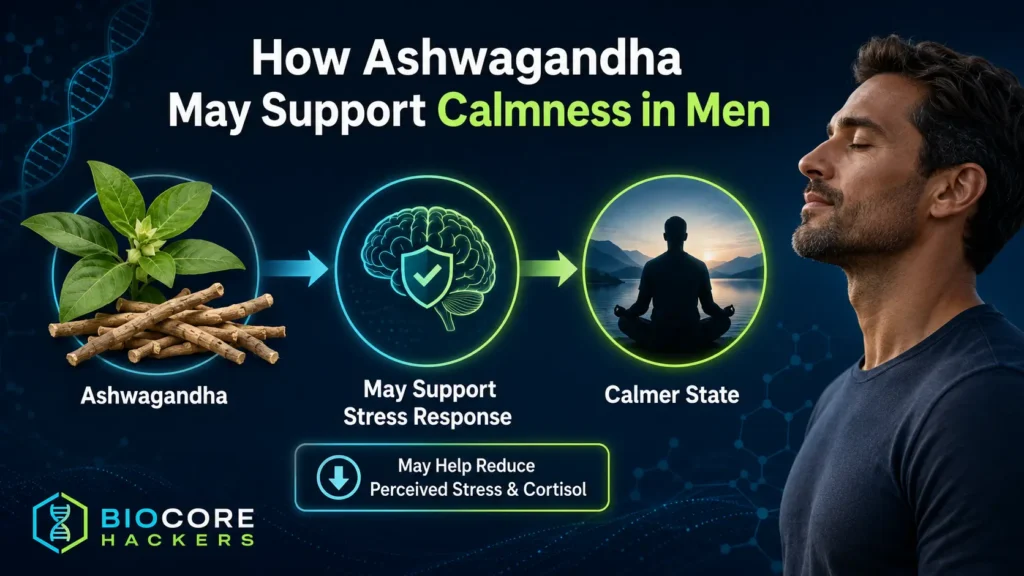
Research suggests that some ashwagandha extracts may support the body’s response to psychological stress. This could contribute to a calmer state in some men, but effects vary and ashwagandha should not be considered a treatment for anxiety or chronic stress.
A 2024 systematic review and meta-analysis found that ashwagandha formulations were associated with improvements in measures of stress and anxiety. Nevertheless, differences in products, dosages and study designs make it difficult to determine one ideal approach for everyone.
The NIH Office of Dietary Supplements reports that several trials have produced encouraging results for stress. However, larger and better-standardized studies are still needed.
2. Ashwagandha Benefits for Sleep Quality
Another potential use of ashwagandha involves sleep.
Research suggests that certain extracts may produce modest improvements in sleep quality. Some participants in clinical studies reported:
- Better overall sleep quality.
- Less time needed to fall asleep.
- Longer total sleep duration.
- Fewer nighttime disturbances.
- Greater alertness after waking.
These results appear more noticeable among people experiencing insomnia, although the evidence remains limited.
Ashwagandha should not replace medical evaluation or treatment for persistent insomnia, sleep apnea or another diagnosed sleep disorder. Healthy sleep habits remain essential. You can also read our guide explaining the importance of quality sleep.
3. Ashwagandha Benefits for Anxiety
Some clinical trials have reported improvements in anxiety scores among participants taking ashwagandha compared with those receiving a placebo.
However, researchers have used different plant extracts, concentrations and study durations. This makes direct comparisons difficult. Some reviews have also rated the certainty of the available evidence as low.
Therefore, ashwagandha should not be described as a proven treatment for an anxiety disorder. Anyone experiencing persistent or severe anxiety should seek help from a qualified healthcare professional.
4. Ashwagandha and Testosterone
Possible effects on testosterone are among the most discussed ashwagandha benefits for men.
Some small studies suggest that supplementation may produce a modest increase in testosterone in certain men, particularly when combined with resistance training or when studied in men experiencing fertility problems.
Research has also examined possible effects on:
- Sperm concentration.
- Sperm movement.
- Male reproductive health.
- Strength and body composition.
These findings do not mean that ashwagandha works like testosterone replacement therapy. It is unlikely to produce a dramatic hormonal increase, and individual responses can vary considerably.
For a complete evidence-based approach, read our guide on how to boost testosterone naturally.
5. Ashwagandha and Cortisol
Cortisol helps regulate energy, metabolism, inflammation and the body’s response to stress. It is necessary for normal health and should not be viewed simply as a “bad” hormone.
Some studies indicate that ashwagandha may reduce elevated cortisol levels in people experiencing psychological stress. This effect could help explain why certain participants report feeling calmer or sleeping better.
However, the objective should not be to reduce cortisol as much as possible. Abnormally low cortisol can also cause serious health problems.
6. Exercise, Muscle and Recovery
Potential exercise support is another reason athletes investigate ashwagandha benefits.
Some clinical trials suggest that supplementation combined with resistance training may support:
- Muscular strength.
- Exercise performance.
- Muscle development.
- Post-workout recovery.
- Aerobic capacity.
These findings are promising, but ashwagandha is not a replacement for consistent training, sufficient protein, appropriate calorie intake and adequate sleep.
People interested in supporting exercise performance should first establish a balanced diet and structured training program.
7. Possible Support for Male Fertility
Ashwagandha has been studied for possible effects on sperm quality and male fertility. Some small studies have reported improvements in sperm concentration, movement or reproductive hormone measurements.
However, the research is not yet strong enough to establish ashwagandha as a fertility treatment. Men concerned about fertility should consult a qualified healthcare professional instead of relying solely on supplements.
How Long Does Ashwagandha Take to Work?
Ashwagandha is not generally considered an instant-acting supplement.
Most clinical studies have evaluated its effects over several weeks. Some people may notice changes in stress or sleep earlier, while others may experience little or no noticeable difference.
Results can depend on:
- The type of extract used.
- The concentration of withanolides.
- Product quality.
- Dosage and duration.
- Individual health conditions.
- Diet, exercise and sleeping habits.
Because extracts are not identical, results from a study involving one standardized product cannot automatically be applied to every ashwagandha supplement.
Is Ashwagandha Safe?
Short-term use may be reasonably well tolerated by many healthy adults. According to the National Center for Complementary and Integrative Health, there is not enough information to determine its long-term safety.
Possible ashwagandha side effects include:
- Stomach discomfort.
- Nausea or vomiting.
- Diarrhea.
- Drowsiness.
- Headache.
Rare cases of liver injury have also been associated with ashwagandha products. Stop using the supplement and seek medical advice if symptoms such as yellowing of the skin, dark urine, unusual itching or severe abdominal discomfort appear.
Who Should Avoid or Be Careful With Ashwagandha?
Consult a doctor or pharmacist before taking ashwagandha if you:
- Are pregnant or breastfeeding.
- Have a thyroid condition.
- Have an autoimmune disorder.
- Have existing liver problems.
- Take diabetes or blood-pressure medication.
- Use sedatives or immune-suppressing medication.
- Are preparing for surgery.
- Regularly take prescription medication.
Ashwagandha may interact with certain medications and may not be appropriate for every health condition.
How to Choose an Ashwagandha Supplement
Supplement quality can vary significantly between products. When comparing options, look for:
- Clear identification of the plant part used.
- A declared amount of ashwagandha per serving.
- Information about withanolide standardization.
- Independent third-party quality testing.
- Complete ingredient and allergen information.
- No exaggerated disease-treatment claims.
Avoid assuming that a higher dose is automatically better. Different extracts may contain very different concentrations of active compounds.
Frequently Asked Questions
What are the main ashwagandha benefits?
The best-researched ashwagandha benefits relate to stress and sleep. Preliminary research has also examined exercise performance, cortisol, testosterone and male reproductive health, but stronger studies are needed.
Can ashwagandha increase testosterone?
Some studies suggest a modest increase in certain groups of men, but results are inconsistent. Ashwagandha is not equivalent to testosterone replacement therapy.
Can you take ashwagandha every day?
Many studies have involved daily use for several weeks, but evidence about long-term safety is limited. Consult a healthcare professional before using it regularly, particularly if you have a health condition or take medication.
Does ashwagandha work immediately?
Usually not. Clinical studies generally examine results after several weeks rather than after one serving.
Can ashwagandha cause side effects?
Yes. Possible effects include drowsiness, nausea, diarrhea, vomiting and stomach discomfort. Rare liver-related problems have also been reported.
The Bottom Line
Current evidence indicates that ashwagandha benefits may include modest support for stress management and sleep quality. Research into exercise, cortisol, testosterone and male fertility is encouraging but not conclusive.
Ashwagandha is not a miracle supplement, and its effects can vary based on the extract, dose, product quality and individual using it.
The safest approach is to treat ashwagandha as a possible addition to a healthy lifestyle—not a substitute for balanced nutrition, exercise, sufficient sleep or appropriate medical care.
This article is for educational purposes and does not replace professional medical advice.





Post Comment