7 Reasons to Use Zinc for Better Health: Benefits and Dosage: What You Need to Know
Zinc for better health is important because this essential mineral supports immune function, metabolism, wound healing, DNA synthesis, and reproductive health. In this guide, you’ll discover the main zinc benefits, the best food sources, recommended daily intake, deficiency symptoms, supplement options, and potential risks.
Zinc may be required only in small amounts, but it plays a surprisingly significant role in the human body. From supporting the immune system to helping the body produce DNA and proteins, zinc is involved in hundreds of biological processes.
Zinc benefits many essential functions in the human body, including immune health, metabolism, wound healing, DNA synthesis, and reproductive function. This guide explains zinc’s benefits, food sources, recommended intake, deficiency symptoms, supplementation, and potential risks.
Zinc is a small but essential mineral that plays a surprisingly large role in the human body.
From supporting the immune system and wound healing to helping the body produce DNA and proteins, zinc is involved in hundreds of biological processes.
It has also become extremely popular in the world of fitness and men’s health, where it is often marketed as a testosterone booster.
But what does the science actually say about zinc? How much do you need, what are the best food sources, and can taking a supplement really improve testosterone?
Zinc requirements vary by age, sex, and life stage. The NIH Office of Dietary Supplements provides evidence-based information about recommended zinc intake, dietary sources, deficiency, supplementation, and safety. Additional guidance about zinc and other essential nutrients is available from the NHS vitamins and minerals guide.
Why Zinc for Better Health Matters
Understanding the importance of zinc for better health can help you maintain an adequate intake without relying on unnecessarily high supplement doses. Getting enough zinc supports normal biological function, while excessive supplementation can cause side effects and nutritional imbalances.
What Is Zinc?
Zinc is an essential trace mineral, meaning your body needs it but cannot produce it on its own.
You therefore need to obtain zinc through food or, when appropriate, dietary supplements.
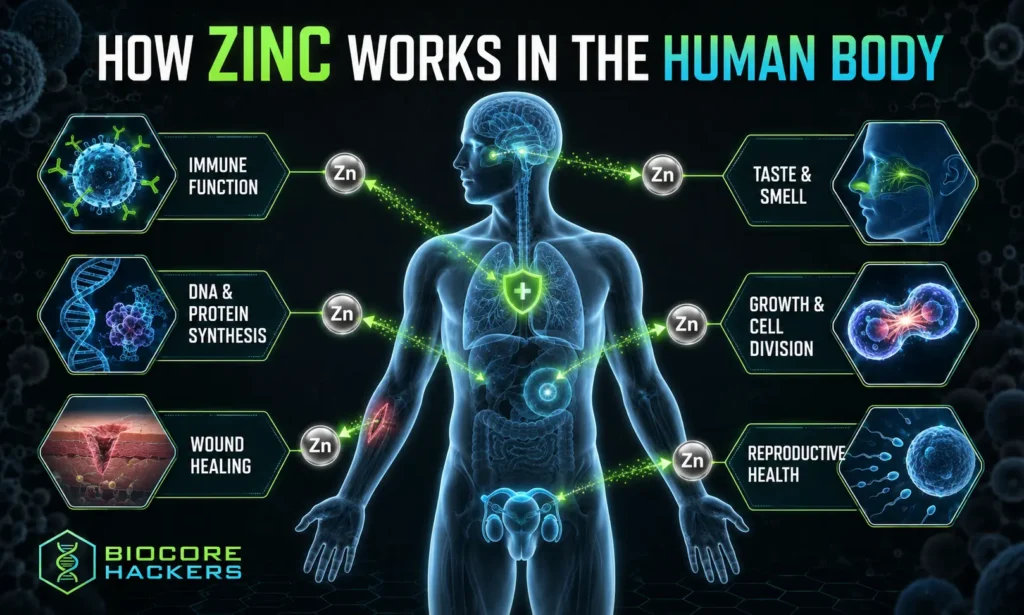
Zinc is involved in:
- Immune function
- DNA and protein production
- Cell division
- Wound healing
- Growth and development
- Taste and smell
- Normal reproductive function
Because zinc is involved in so many biological processes, maintaining adequate zinc levels is important for overall health.
Table of Contents
1. Zinc Supports the Immune System
One of zinc’s best-established roles is supporting normal immune function.
Your immune cells rely on zinc for proper development and activity.
A zinc deficiency can impair immune function and increase susceptibility to certain infections.
However, this doesn’t mean that taking large amounts of zinc will automatically make your immune system stronger.
If you already consume enough zinc, taking additional amounts may provide little additional benefit.
The goal is adequacy, not excess.
2. Zinc Is Important for Wound Healing
Zinc contributes to processes involved in maintaining skin integrity and repairing damaged tissue.
The mineral plays a role in cell division, protein synthesis, and other processes involved in tissue repair.
For this reason, severe zinc deficiency can interfere with normal wound healing.
People who have an adequate zinc intake generally don’t need large doses of supplements simply to accelerate normal healing.
3. Zinc and Hormonal Health
Zinc has attracted considerable attention because of its relationship with hormones, particularly testosterone.
Zinc is involved in normal reproductive and endocrine function, and research has found an association between zinc status and testosterone levels.
A systematic review published in 2023 found that zinc deficiency was associated with lower testosterone and that supplementation could improve testosterone in some settings. However, the effects varied according to baseline zinc and testosterone status, dosage, and duration.
This leads to an important distinction:
Zinc is essential for normal testosterone production, but more zinc does not necessarily mean more testosterone.
If someone is deficient, correcting that deficiency may help restore normal physiological function. But taking high-dose zinc when zinc status is already adequate is not a reliable way to dramatically increase testosterone.
Obtaining zinc for better health through a balanced diet is generally preferable to relying entirely on supplements.
Discover how zinc fits into a broader strategy to boost testosterone naturally.
4. Zinc and Male Fertility
Zinc is particularly important for male reproductive health.
The mineral is involved in processes related to sperm production and reproductive function.
Research has investigated zinc supplementation for sperm concentration, morphology, motility, and other fertility-related outcomes.
Some studies have reported potential improvements, particularly in people with nutritional deficiencies or specific fertility problems.
However, results are not consistent enough to consider zinc a universal treatment for male infertility.
A systematic review of zinc and folate supplementation, for example, found improvements in some sperm characteristics but did not find a significant improvement in testosterone or sperm motility compared with placebo.
Using zinc for better health does not mean everyone needs a supplement, especially when dietary intake is already adequate.
5. Zinc and the Common Cold
Zinc is also widely known for its potential role in the common cold.
Some research suggests that zinc lozenges, when started shortly after cold symptoms appear, may shorten the duration of a cold in certain circumstances.
However, results depend on the formulation, dose, and timing.
Zinc should not be viewed as a guaranteed way to prevent or cure respiratory infections.
The evidence is more specific to certain zinc lozenge preparations used early in a cold rather than simply taking a daily zinc supplement.
Zinc for better health begins with meeting your nutritional requirements without consistently exceeding safe intake levels.
6. Zinc Supports Normal Growth and Development
Zinc is particularly important during periods of rapid growth.
Children, adolescents, and pregnant women have increased nutritional requirements.
Zinc contributes to DNA synthesis, cell division, and normal growth and development.
Severe zinc deficiency during childhood can lead to impaired growth and other health problems.
7. Zinc and Brain Function
Zinc is present throughout the body, including in the brain.
It contributes to normal cellular and neurological processes.
Severe deficiency can affect taste, smell, cognition, and other functions.
However, claims that zinc supplementation dramatically improves memory, intelligence, or concentration in healthy people are not well established.
As with many nutrients, correcting a deficiency is much more important than consuming excessive amounts.
How Much Zinc Do You Need?
The recommended daily intake depends on age and sex.
For adults:
Men: approximately 11 mg per day
Women: approximately 8 mg per day
During pregnancy and breastfeeding, requirements are higher.
Most people can obtain sufficient zinc through a varied diet.
Best Food Sources of Zinc
Some of the richest dietary sources include:
🥩 Red meat
🦪 Oysters and other seafood
🍗 Poultry
🥛 Dairy products
🥜 Nuts
🌱 Beans and legumes
🌾 Whole grains
🥣 Fortified breakfast cereals
Animal foods generally provide zinc in a form that is well absorbed, while certain plant compounds can reduce zinc absorption.
This doesn’t mean plant-based diets cannot provide enough zinc; they simply require attention to overall dietary intake.
Zinc Supplements
Zinc supplements are available in several forms, including:
- Zinc gluconate
- Zinc citrate
- Zinc sulfate
- Zinc picolinate
- Other zinc compounds
The amount of elemental zinc is more important than simply looking at the total weight of the compound.
When comparing supplements, check the nutrition or supplement facts panel for the amount of elemental zinc.
Can You Take Too Much Zinc?
Yes.
This is one of the most important things to understand about zinc supplementation.
For adults, the tolerable upper intake level is 40 mg of zinc per day from all sources, unless a healthcare professional recommends otherwise for a specific medical reason.
Excessive zinc intake can cause:
- Nausea
- Vomiting
- Stomach discomfort
- Headaches
- Loss of appetite
Long-term excessive intake can interfere with copper absorption, potentially leading to copper deficiency and other health problems.
Very high zinc intake can also interfere with the absorption of some other minerals.
Zinc and Copper: An Important Balance
One of the biggest mistakes people make with long-term zinc supplementation is ignoring copper.
Large amounts of zinc can reduce copper absorption.
Copper is itself an essential mineral involved in red blood cell production, connective tissue, nervous system function, and energy metabolism.
Therefore, taking high-dose zinc for long periods without medical supervision can create a nutritional imbalance.
More is not always better.
Can Zinc Boost Testosterone?
Zinc is only one part of maintaining normal hormonal health. Sleep, resistance training, body composition, stress management, vitamin D, and a balanced diet can also influence testosterone. Read our complete guide on how to boost testosterone naturally for practical, evidence-based strategies.
This deserves a clear answer.
If you are zinc deficient, correcting the deficiency can support normal testosterone production.
But if you already have adequate zinc levels, there is no strong evidence that simply taking large amounts of zinc will produce a major testosterone increase.
Research examining testosterone “boosters” has found that evidence for individual ingredients varies considerably, and the effects of zinc depend heavily on the individual’s baseline nutritional status.
So zinc should be viewed as an essential nutrient for normal hormonal function, not as a guaranteed testosterone-boosting drug.
When Might Zinc Supplementation Make Sense?
Supplementation may be useful for people who have inadequate dietary intake or are at higher risk of deficiency.
People who may have a higher risk include individuals with certain gastrointestinal conditions, restrictive diets, or other circumstances that affect zinc absorption or intake.
If you suspect a deficiency, it’s better to discuss your situation with a healthcare professional rather than automatically taking a high-dose supplement.
The Bottom Line
Zinc is an essential mineral that your body needs every day.
It supports immune function, wound healing, DNA and protein production, growth, reproductive health, and many other biological processes.
For men interested in testosterone, zinc is particularly relevant because adequate zinc status is important for normal reproductive and hormonal function.
But the popular idea that “more zinc equals more testosterone” is misleading.
The biggest benefits of supplementation are most likely to occur when someone isn’t getting enough zinc in the first place.
Zinc is essential — but more isn’t necessarily better.
Key Takeaways
🧬 Zinc is involved in hundreds of biological processes.
🛡️ It supports normal immune function.
🩹 It contributes to wound healing and tissue repair.
💪 Zinc is important for normal reproductive and hormonal function.
🧔 Correcting zinc deficiency may support normal testosterone levels.
🥩 Meat, seafood, dairy, beans, nuts, and fortified foods can provide zinc.
⚠️ Excessive long-term supplementation can cause copper deficiency and other problems.
📏 The adult upper limit is generally 40 mg/day from all sources unless medically supervised.
At Biocore Hackers, we believe the goal isn’t to take more supplements — it’s to understand what your body actually needs.

Post Comment